What is a Smart Port?
By Youcef Kabli,Portnex
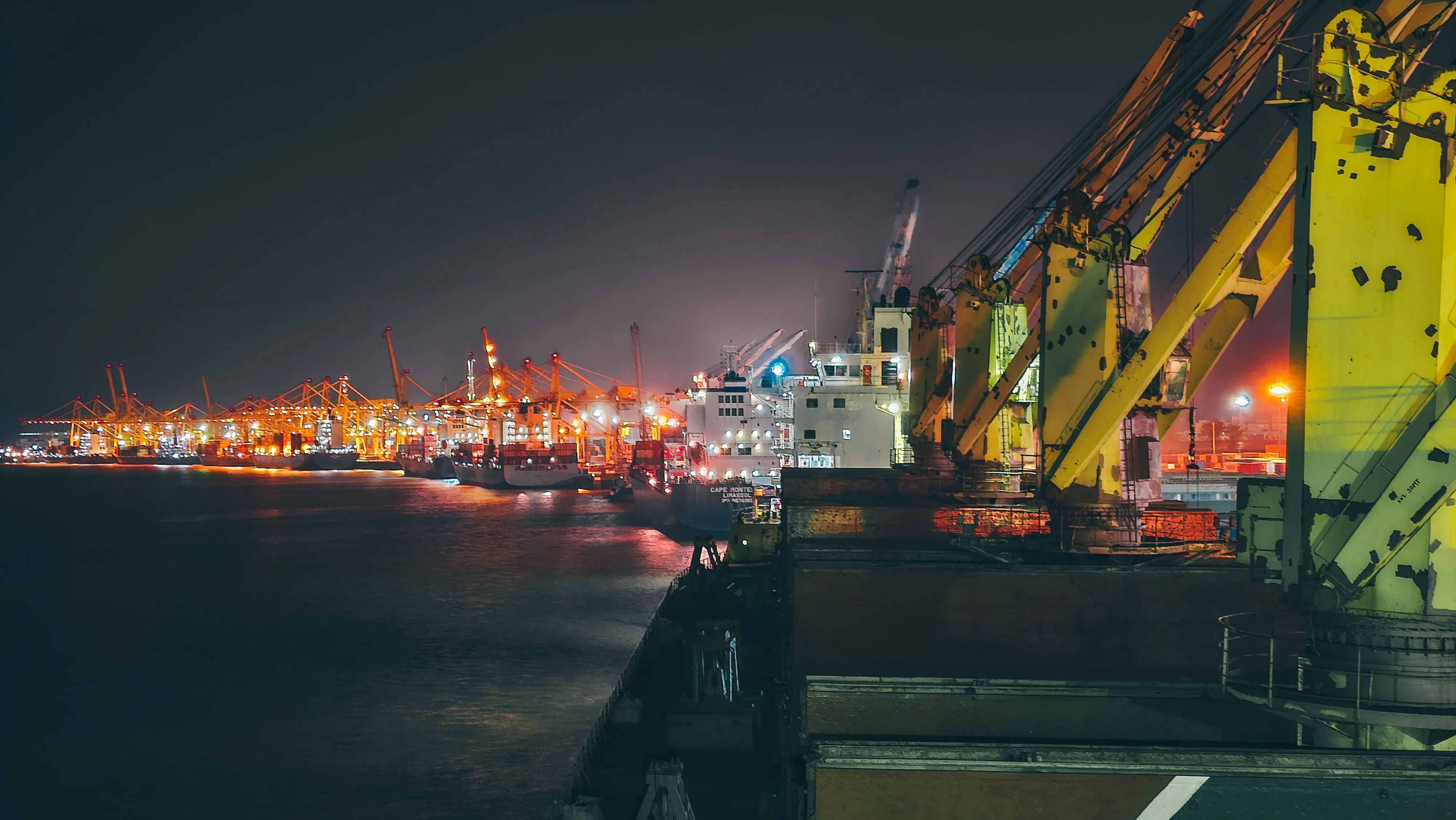
A smart port is a seaport that uses digital technologies, automation, connected sensors, artificial intelligence, and shared data systems to improve how ships, cargo, people, equipment, and energy move through the port. In simple terms, a smart port turns port operations into a connected, data-driven system.
Smart port development is more than the adoption of isolated technology. A smart port combines technological innovation with port governance, port-shipping cooperation, environmental performance, and operational efficiency. Chen et al. argue that smart and green port development are closely linked because intelligent technologies help ports reduce emissions, improve resource use, and strengthen sustainable operations.
What makes a port “smart”?
A port becomes smart when it can collect reliable operational data, share it across stakeholders, analyze it in real time, and convert it into better decisions. This includes decisions about berth allocation, vessel arrivals, yard planning, cargo flows, gate traffic, equipment maintenance, emissions, energy use, and safety.
The core features of a smart port are:
- Connected infrastructure: sensors, cameras, AIS, IoT devices, smart meters, and equipment telemetry.
- Data integration: shared systems connecting port authorities, terminals, shipping lines, customs, trucking, rail, and logistics providers.
- Automation: automated gates, cranes, yard equipment, documentation, and workflow routing.
- AI and analytics: forecasting, optimization, anomaly detection, predictive maintenance, and decision support.
- Digital twins: virtual models of port operations used for simulation, planning, and operational control.
- Sustainability systems: energy management, emissions monitoring, shore power, and resource optimization.
- Cybersecurity and governance: standards, access control, data quality, and stakeholder rules
Why smart ports matter
Ports are complex socio-technical systems. They connect ocean transport with inland logistics, customs processes, labor, infrastructure, energy systems, and urban environments. The Springer volume Maritime Informatics frames maritime digitalization as a discipline for improving decision-making, efficiency, safety, and ecological sustainability across shipping, ports, and terminals.
Smart ports matter because traditional port operations often suffer from fragmented data, unpredictable vessel arrivals, manual paperwork, congestion, idle equipment, and limited visibility between organizations. Digital coordination helps reduce waiting time, improve asset utilization, and make operations more resilient.
Key technologies in a smart port
Internet of Things: Sensors and connected devices collect data from cranes, gates, vehicles, berths, storage yards, energy systems, and environmental monitors.
Artificial intelligence: AI models can forecast vessel arrival times, detect congestion, optimize equipment deployment, predict maintenance needs, and support safety monitoring.
Digital twins: A digital twin is a virtual representation of port processes, assets, and flows. Research by Klar, Fredriksson, and Angelakis identifies three key requirements for port digital twins: situational awareness, analytics for intelligent decision-making, and interfaces for multi-stakeholder governance and collaboration.
Business process management systems: Many port processes, including cargo manifests, customs declarations, dangerous goods handling, and scale management, can be coordinated through digital workflow systems. Martin-Navarro, Lechuga Sancho, and Medina-Garrido note that BPMS can modernize port logistics by automating and coordinating critical port activities.
Energy management systems: Smart ports also use energy systems to manage electricity demand, emissions, and operational costs. Recent research on smart-port energy management found that integrated energy systems can reduce energy consumption, carbon emissions, and operating costs, while highlighting challenges around integration, data quality, cybersecurity, and standardization.
Benefits of smart ports
The main benefits of smart ports are faster operations, better visibility, stronger resilience, lower emissions, improved safety, and more coordinated decision-making.
For port authorities, smart systems support better planning, regulatory oversight, security, and infrastructure use. For terminal operators, they improve yard productivity, berth planning, equipment availability, and gate flow. For shipping lines and cargo owners, they create more predictable port calls and better supply chain visibility. For cities and communities, they can reduce congestion, pollution, and unnecessary truck or vessel waiting time.
Challenges and risks
Smart ports are not created by technology alone. They require data governance, cybersecurity, standardization, workforce training, investment discipline, and cooperation between many independent stakeholders.
The biggest challenges are:
- fragmented legacy systems;
- poor data quality;
- lack of interoperability;
- unclear data ownership;
- cybersecurity exposure;
- resistance to operational change;
- high capital costs;
- uneven digital maturity between stakeholders.
A port can install sensors and software without becoming truly smart. The real value appears when digital systems change decisions and outcomes.
Smart port vs. automated port
A smart port is broader than an automated port. An automated port uses machines or software to perform tasks with less manual intervention. A smart port uses automation plus data, analytics, governance, and collaboration to improve the whole port ecosystem.
For example, an automated crane can move containers efficiently. A smart port connects that crane data with berth schedules, yard capacity, gate appointments, vessel arrival forecasts, and emissions targets.
A smart port is a digitally connected, data-driven, and increasingly automated port designed to improve efficiency, safety, sustainability, and collaboration. Its value comes from connecting operational technology with shared decision-making. The most successful smart ports treat digitalization as a governance and operations strategy, not just a technology upgrade.
.webp)